Practice onboarding

Your practice is starting case conferencing

What you need to know

in partnership with Brecken Health

The Conference.care platform

The basics

What is a case conference?

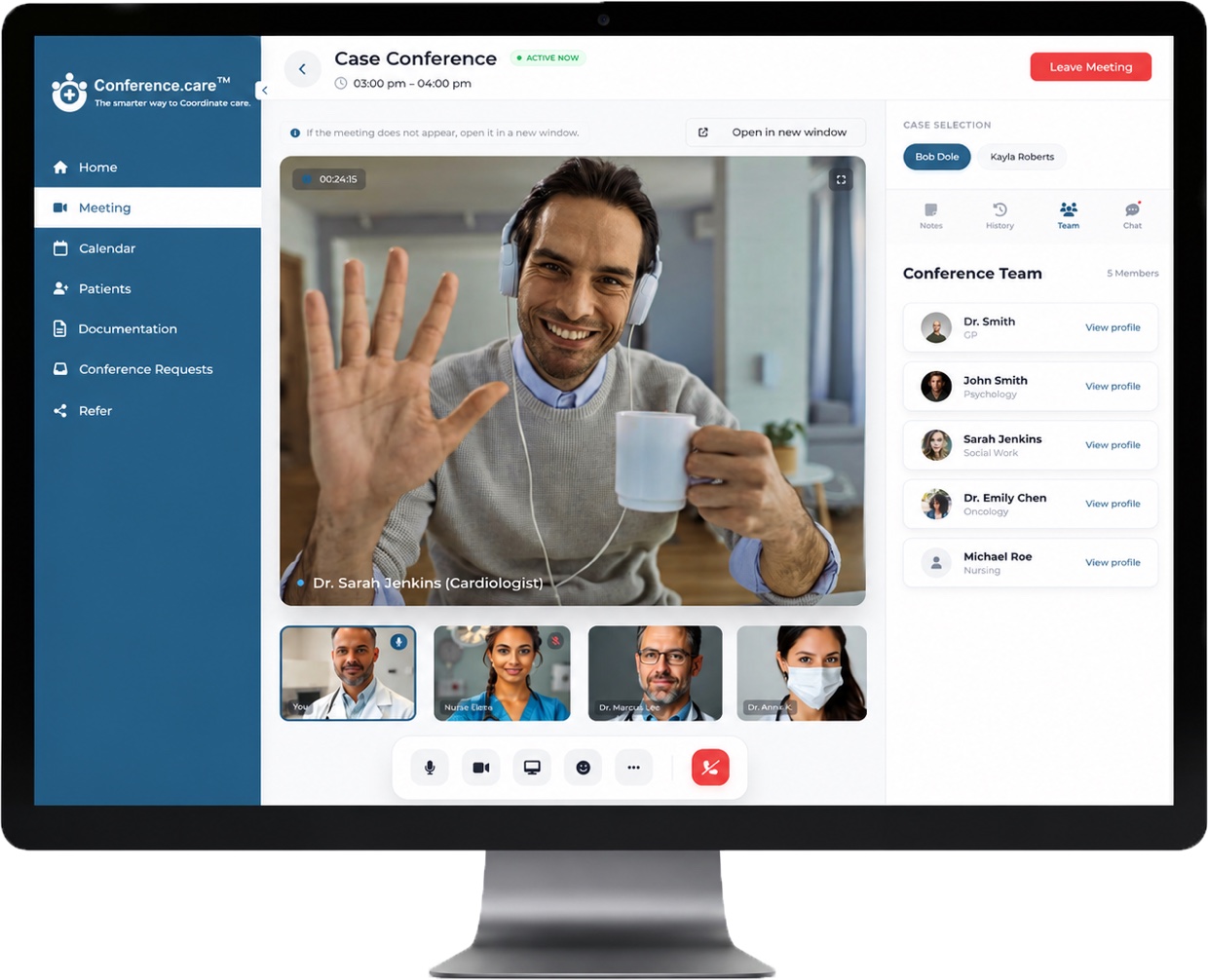
Conducted via video call

Specialist
Podiatrist
Psychologist
Physiotherapist

A meeting where a GP draws on the expertise of several allied health clinicians — an opportunity to get expert advice on how best to manage their most complex, chronic-disease patients.

Goal: to ensure all aspects of a patient's health are addressed in a coordinated way.
  • Billable under Medicare — at higher rates than standard consults
  • Patients do not need to attend
  • Completely free for GPs

The rationale

Why is our practice starting case conferencing?

Research shows case conferences:

Ensure patient problems are properly identified3,4

Promote communication & decision-making10,11

Clarify goals of care and care plans5,6

Help reduce avoidable hospital admissions1,2

Minimise errors in communication9

Facilitate appropriate medication review7,8

93%

of Australian patients believe case conferences have a positive effect on their care

Who it helps

Patients who benefit most

Any patient with a chronic disease qualifies — these cohorts benefit most.

Patients in a clinic waiting room
Palliative care Diabetes Chronic pain Cardiorespiratory + other chronic diseases Stroke recovery Mental health Geriatric care

The numbers

Higher billings than standard consults

Medicare rebates case conferences at higher rates than comparative standard consult items.

Min. timeStandard consultCase conference
< 20 min$42.85$80.55
20 min$82.90$137.75
40 min$122.15$229.65

Billings per hour

Bulk billing
$256.80
Mixed
$302.30
Private
$347.80
Case conferencing
$434.70
+70%

Case conferencing generates up to 70% more per hour than standard consults

Our role

What Conference.care does for you

  • 1Finds and coordinates the specialists and allied health clinicians to conduct case conferences with
  • 2Organise and schedule GP case conferences each week
  • 3Provide virtual meeting rooms for GP case conferences
  • 4Obtain patient consent to ensure bulk billing your case conferences is Medicare compliant

GP running a case conference

Conference.care manages all admin and logistics — leaving GPs to focus on their patients' care.

The platform

Running a conference is simple

You'll receive a comprehensive step-by-step guide — but the platform is genuinely simple to use.
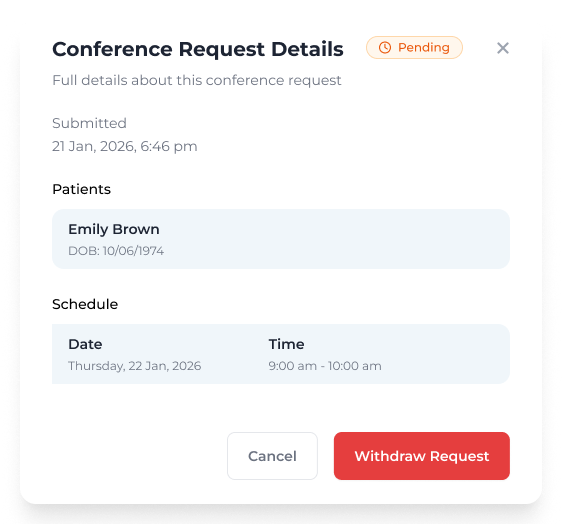
Conference request details
1 Schedule conferencePick a time that suits your GPs
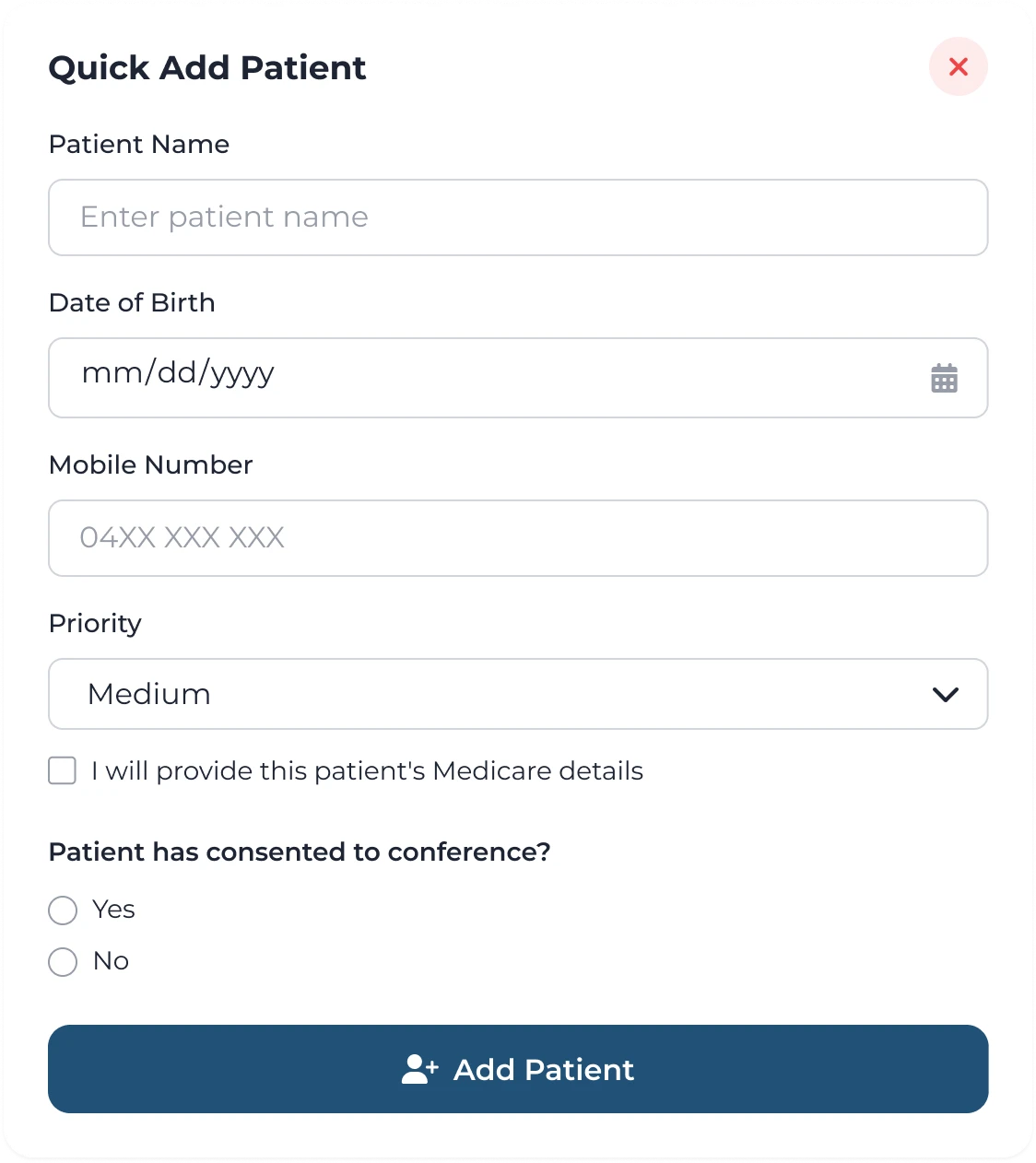
Quick add patient form
2 Add the patientDetails & consent in one step
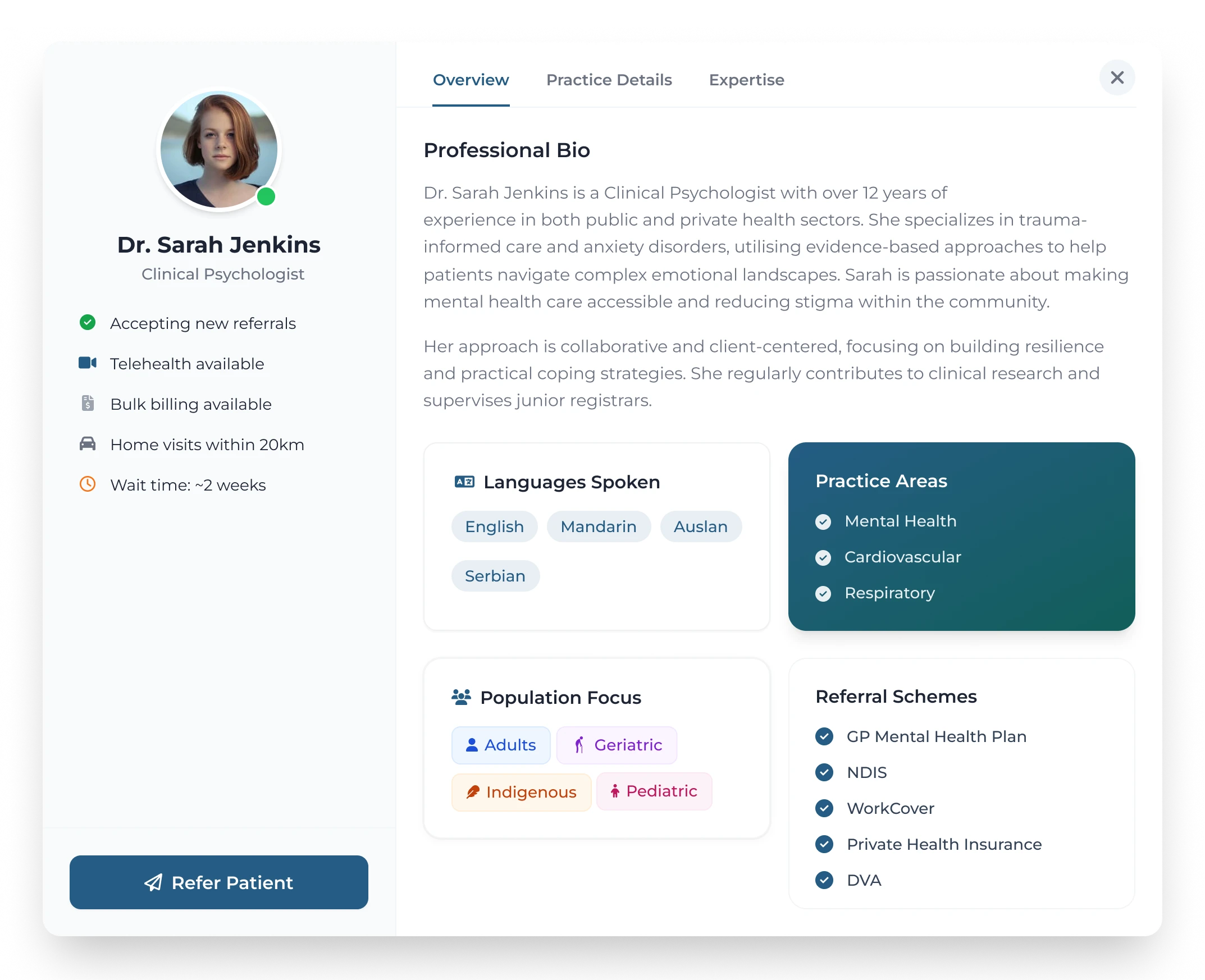
Selecting the care team
3 Pick the team1,000+ specialists & allied health
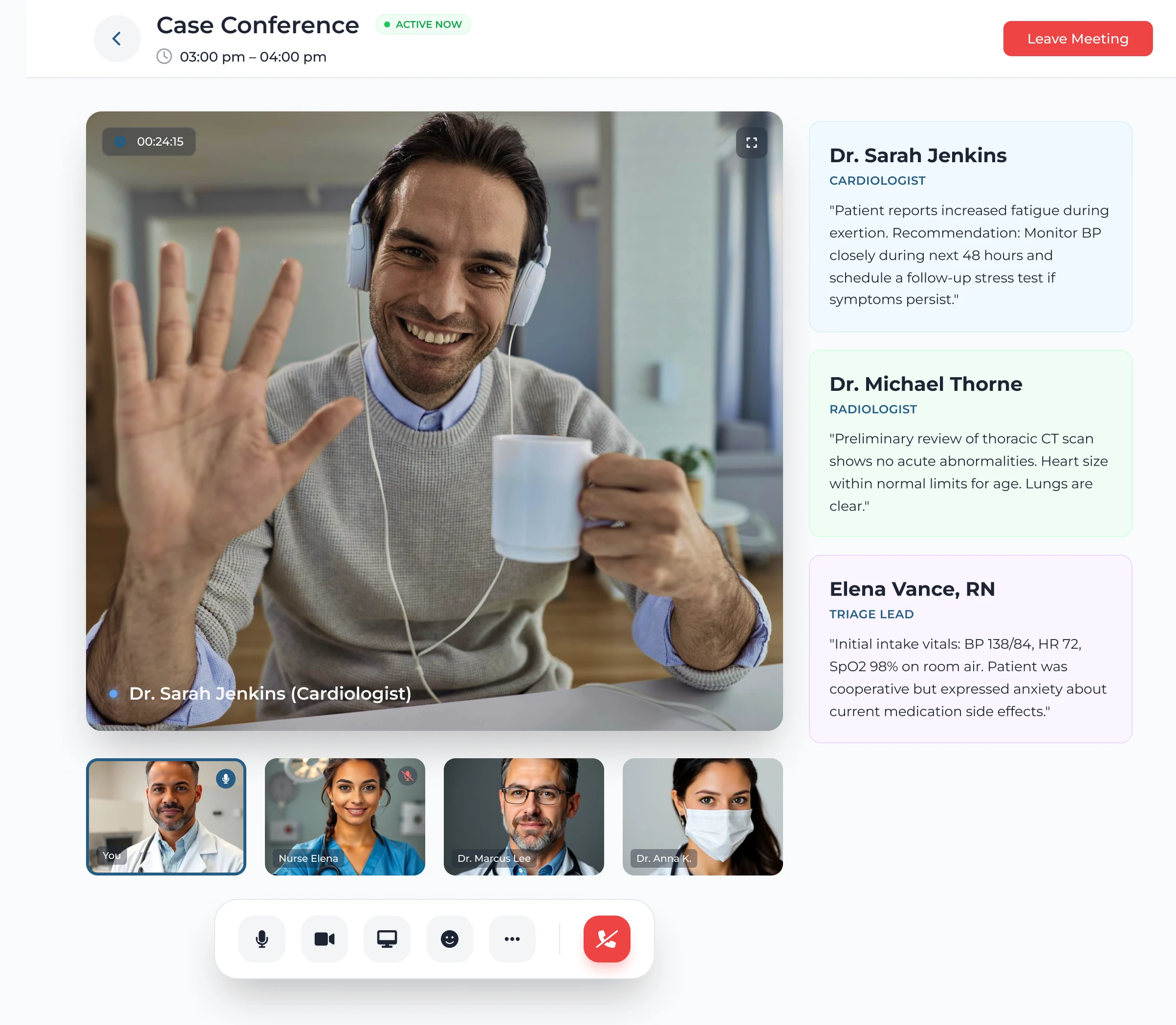
Joining the video case conference
4 Join securelyOne click into the meeting room

Documentation and notes are captured for import into your practice software

Conference request details
1Schedule conferencePick a time that suits your GPs
Quick add patient form
2Add the patientDetails & consent in one step
Selecting the care team
3Pick the team1,000+ specialists & allied health
Joining the video case conference
4Join securelyOne click into the meeting room

Your points of contact

Who's looking after your account

Dr Daniel Nguyen
Dr Daniel Nguyen
GP point of contact
Rosanna Hussey
Rosanna Hussey
Your dedicated account manager

Rosanna is your first point of contact for any questions, issues, or troubleshooting. Don't hesitate to reach out.
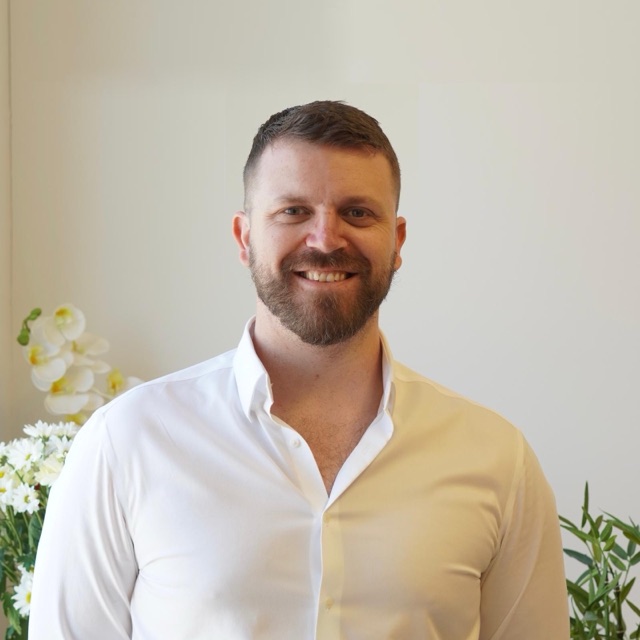
Trent Raykos
Trent Raykos
Allied health point of contact

How it works

Getting started

  • We register your practice on the Conference.care platform — you'll receive login credentials for each GP user shortly.
  • Establish a regular time block with your GPs — a weekly recurring slot (e.g. Tuesday 1–2pm) works best. Block it off in your GPs' calendars ongoing as a non-patient-facing block.
  • Add patients — GPs flag complex patients as they see them, or practice managers proactively review files and add eligible patients.
  • We handle the rest — we source clinicians, send invites, collect consent, and set up the meeting room.
Tip: you only need 2–3 patients added to fill a one-hour weekly block. Start small — even one or two sessions per week makes a meaningful difference.

How it works

Week to week

Before the conference
  • 24 hours prior, confirm which patients your GPs want to discuss — or have GPs flag suitable patients as they see them in clinic
  • Practice staff can proactively add patients by reviewing complex files (eligible = any chronic disease patient)
  • We send all invites, collect consent, and set up the virtual meeting room
During the conference
  • GP clicks the meeting room link we provide
  • Conference conducted via videocall with our allied health clinicians
  • Documentation generated and provided for upload to your PMS
After
  • Your GP bills Medicare for the conference
  • We schedule the next round

Our network

Allied health clinicians we provide

Physiotherapists
Exercise physiologists
Dieticians
Podiatrists
OTs
Speech pathologists
Diabetes educators
Psychologists
Mental health nurses
Social workers
ATSI health workers
+ more on request

Common conference types

Diabetes: GP + diabetes educator, dietician, podiatrist, exercise physiologist, physio

Geriatrics: GP + physio, OT, dietician, exercise physiologist

Chronic pain: GP + physio, OT, dietician, exercise physiologist, psychologist

Cardiorespiratory: GP + dietician, physio, OT, exercise physiologist

Mental health: GP + psychologist, social worker, mental health nurse, dietician, exercise physiologist

Addressing GP questions

Common questions from GPs

Q Does this cost me anything?

No. Conference.care is completely free for GPs. All costs are covered by Medicare rebates.

Q Will my patients actually agree to this?

Yes — 93% of Australian patients support case conferences. We manage consent on your behalf; nothing is scheduled until a patient has agreed.

Q How much of my time does it take?

Typically one-hour blocks — enough to discuss 2–3 patients using 20- and 40-minute combinations, depending on each patient's complexity and needs.

Q How does documentation reach our software?

We provide Medicare-compliant documentation after each conference. Practice staff upload it to your PMS (Best Practice, Medical Director) — or we send it immediately.

Q I already coordinate informally — why do I need this?

Informal coordination isn't billable. Case conferences let you get remunerated for coordination you already do, at higher rates — with a formal, documented care plan.

Q What if a provider doesn't show up?

We source and manage all clinicians. If someone can't attend, we rebook. You're never left without a team.

Q Do patients need to attend?

No. Case conferences can be conducted without the patient present — your GP simply discusses the patient's care with the allied health team via video call.

Better care.
Better billings.
Zero admin.

Conference.care manages everything — so your GPs can do what they do best.

www.conference.care
Conference.care Brecken Health
↩ Back to Slide 3

Evidence base

References

1.Mitchell G, Del Mar C, O'Rourke P, Clavarino A. Do case conferences between general practitioners and specialist palliative care services improve quality of life? A randomised controlled trial. Palliative Medicine. 2008;22(8):904–12. doi:10.1177/0269216308096721
2.Halcomb EJ, Griffiths R, Sheperd BM. Perceptions of multidisciplinary case conferencing in residential aged care facilities. Australian Health Review. 2009;33(4):566. doi:10.1071/ah090566
3.To THM, Tait P, Morgan DD, Tieman JJ, Crawford G, Michelmore A, et al. Case conferencing for palliative care patients – a survey of South Australian general practitioners. Australian Journal of Primary Health. 2017;23(5):458. doi:10.1071/py16001
4.King MA, Roberts MS. Multidisciplinary case conference reviews: improving outcomes for nursing home residents, carers and health professionals. Pharmacy World & Science. 2001;23(2):41–5. doi:10.1023/a:1011215008000
5.Davison G, Shelby-James TM. Palliative care case conferencing involving general practice: an argument for a facilitated standard process. Australian Health Review. 2012;36(1):115. doi:10.1071/ah10984
6.Shelby-James T, Currow D, Phillips J, Williams H, Abernethy A. Promoting patient centred palliative care through case conferencing. Australian Family Physician. 2007;36(11):961–3. racgp.org.au/afp/200711/20754
7.Shelby-James T, Butow P, Davison G, Currow D. Case conferences in palliative care: a substudy of a cluster randomised controlled trial. Australian Family Physician. 2012;41(8):608–12.
8.Tuckett A, Parker D, Clifton K, Glaetzer K, Greeve K, Israel F, et al. What general practitioners said about the palliative care case conference in residential aged care: an Australian perspective. Part 1. Progress in Palliative Care. 2013;22(2):61–8. doi:10.1179/1743291x13y.0000000066
9.Francisco MC, Lane H, Luckett T, Disalvo D, Pond D, Mitchell G, et al. Facilitated case conferences on end-of-life care for persons with advanced dementia — a qualitative study. Age and Ageing. 2022;51(2). doi:10.1093/ageing/afab270
10.Holle D, Krüger C, Halek M, Sirsch E, Bartholomeyczik S. Experiences of nursing staff using dementia-specific case conferences in nursing homes. American Journal of Alzheimer's Disease & Other Dementias. 2014;30(3):228–37. doi:10.1177/1533317514552320
11.Halcomb EJ. Feasibility and sustainability of a model of multidisciplinary case conferencing in residential aged care. Australian Journal of Primary Health. 2009;15(3):238. doi:10.1071/py08073